
VIP News
Booking Season for VIP Salons: What Changes
How peak periods affect limits, service availability and entry requirements.
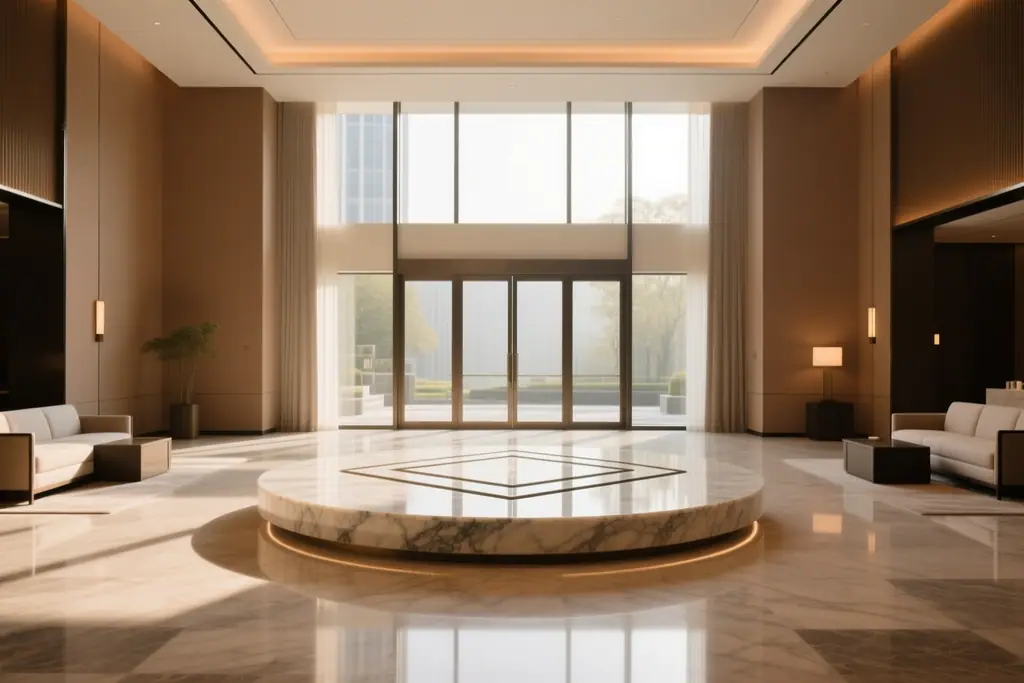
Elite hospitality in gaming is being reshaped by the expectations of the players it serves. Guests who can choose where to spend their time increasingly look for privacy, personal service and a sense of control over the visit, and venues are responding by rethinking the guest experience rather than only the floor. The shifts are gradual, which makes them easy to miss, but they point in a consistent direction. This note looks at the trends worth watching, what they mean for the player and what to check. Entry is for adults only (18+), and the rules and limits are set by the operator.
Privacy has become a defining expectation rather than a premium extra. Guests want discretion around their arrival, their play and their departure, and they value spaces that separate them from the main floor. Venues have followed by building more private areas and by managing guest information more carefully.

For the player, this trend means more control over who knows about a visit and more choice about how public the evening feels. It also means that privacy is increasingly something to arrange in advance rather than assume, since the most discreet spaces are often the most limited.
As properties compete on similar facilities, service has become the clearest point of difference. Personal hosts, closer staff-to-guest ratios and tailored arrangements are the ways venues try to stand out. The quality of the relationship increasingly matters more than the scale of the building.
This favours guests who build a relationship over time. A host who knows a player's preferences can shape a visit in ways a generic welcome cannot. The trend rewards continuity rather than a single high-profile arrival.
Technology supports that shift without replacing it. Venues use guest preferences to prepare a visit before it begins, so the host can greet a returning player with arrangements already in place. The tooling is invisible when it works, and the guest experiences only the result: an evening that seems to have been anticipated rather than assembled.
Grandeur is no longer sufficient on its own. Guests increasingly expect a visit shaped around their own habits — the games they play, the pace they prefer and the hospitality they value. Venues respond by gathering preferences and by offering flexibility rather than one fixed experience.
The result is that two guests can have quite different evenings in the same property. Personalisation puts more of the visit in the guest's hands and asks the venue to anticipate rather than standardise.
The counterweight is consistency. When every visit is tailored, the venue must still deliver the same standard every time, or the personal touch becomes unpredictable. The most successful properties pair flexibility with a steady baseline, so a guest knows what is guaranteed and what is arranged around it.
For the wider market, the effect is gradual levelling. As privacy and personal service become expected rather than exceptional, they stop being selling points and start being the price of entry. Venues that once led on such features now find them assumed, which pushes the competition onward into finer details of care.
The practical meaning is that the guest's own planning matters more. A player who communicates preferences, asks what can be arranged and builds a relationship will get more from the newer approach than one who expects a fixed package. Hospitality is becoming a conversation.
It also means expectations should stay realistic. Personalised service and privacy are offered at the venue's discretion and within its own rules, and they can change. A guest should treat them as hospitality to be confirmed, not as rights to be assumed.
Because these trends are delivered through arrangements rather than published standards, the checks are about process.
Seen together, the shifts reinforce one another. The table below frames where the emphasis is moving.
| Area | Where the emphasis is moving |
|---|---|
| Space | Toward more private, separate areas |
| Service | Toward personal host relationships |
| Experience | Toward flexibility over fixed packages |
Elite hospitality is changing in favour of privacy, personal service and flexibility, and the direction is clearer than any single detail within it. For players, the useful response is to plan, to communicate preferences and to confirm arrangements rather than assume them. Anyone considering a visit should check privacy options, entry rules and limits directly with the operator, since the operator sets the rules and limits and may adjust them. Entry is 18+, and play should remain responsible and within a budget set in advance.
Other guides from VIP News.
How peak periods affect limits, service availability and entry requirements.
What remains standard at the door and what venues have adjusted recently.
What new high-limit areas offer and how to read their limit structure.