
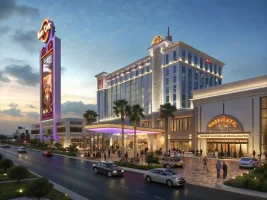
Athens has always lived with one foot in history and the other in reinvention. Its strongest images are ancient stone, bright sea, crowded terraces, late dinners, and a kind of urban energy that never fully switches off. Now the city is preparing for a different kind of landmark: Hard Rock Hotel & Casino Athens, a vast integrated resort planned inside The Ellinikon, the redevelopment of the former international airport on the Athenian Riviera.
The question is not only whether a new casino hotel can attract high-spending visitors. The larger question is whether Athens can turn its southern coastline into a European luxury entertainment hub with enough scale, glamour, transport access, culture, and year-round appeal to compete with destinations that have dominated this market for decades. Hard Rock’s project has the ingredients for a bold answer, but its success will depend on more than architecture and gaming tables. It will depend on whether the Riviera can offer a full lifestyle: sea, music, hospitality, dining, business events, nightlife, shopping, and a sense of place that feels genuinely Greek rather than copied from Las Vegas or Macau.
A resort built around more than gaming
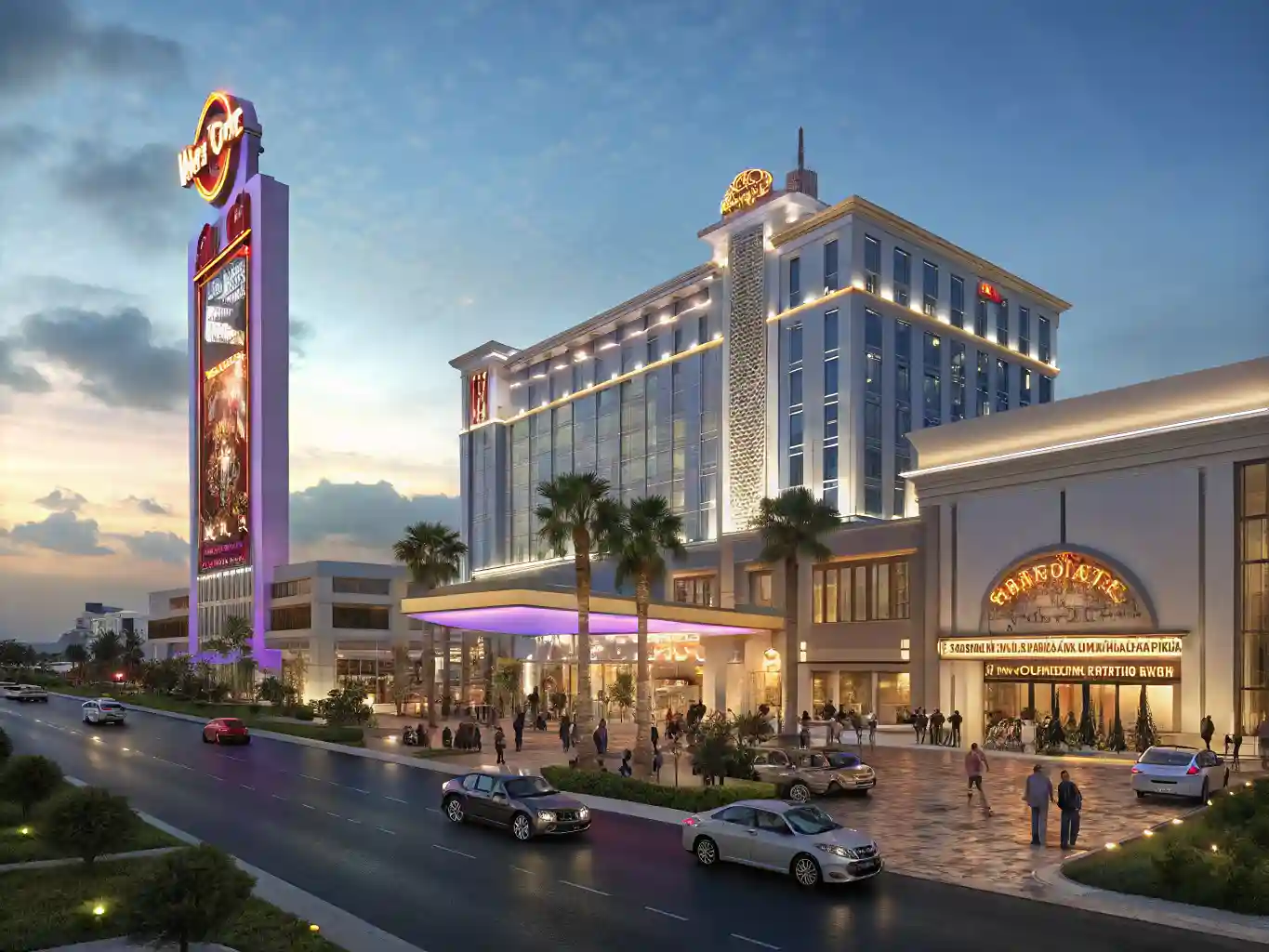
Hard Rock Hotel & Casino Athens is not being presented as a conventional casino attached to a hotel. Its ambition is closer to the integrated resort model: a destination where the casino is important, but not the only reason to come. That distinction matters. European visitors, especially luxury travellers, rarely choose a trip only because of gambling. They want atmosphere, restaurants, shows, spa time, views, walkable surroundings, and a destination that gives them enough reasons to extend a stay.
The planned resort fits that logic. The hotel tower is expected to include around 1,100 beds, with rooms and suites designed around views of the sea, Athens, and, in some cases, the Acropolis. The casino floor is planned at nearly 15,000 square metres, with hundreds of tables and gaming machines. The entertainment side is just as prominent, with Hard Rock Live planned as a major venue for concerts and events. Add a conference centre, restaurants, retail spaces, rooftop leisure areas, spa facilities, and outdoor zones, and the project starts to look less like a single building and more like a compact entertainment district.
That is why the project could change the way international visitors think about Athens. For decades, the Greek capital has been a cultural stop, a ferry gateway, a summer city break, and a business destination, but not a major gambling luxury address. Hard Rock wants to add another layer: Athens as a place where a visitor can spend the morning near the sea, the afternoon in a spa or shopping area, the evening at dinner, and the night at a concert or casino floor without leaving the Riviera.
This does not mean the casino becomes secondary. Gaming is still the commercial anchor. What changes is the emotional role of the casino. In a successful integrated resort, gambling is part of a wider rhythm rather than a closed room separated from the city. Visitors may play, but they may also come for a show, a business event, a rooftop bar, or a long weekend. That makes the audience broader and gives the resort more resilience across seasons.
Why the Athenian Riviera has the right ingredients
The Athenian Riviera has one advantage that many casino destinations cannot easily create: a coastline with real Mediterranean identity next to a major capital. It is not an artificial strip built in the desert. It is a chain of seaside neighbourhoods, marinas, beaches, restaurants, and residential areas stretching south from central Athens. The setting already carries lifestyle value. The challenge is to turn that value into a coherent international destination.
The Ellinikon redevelopment is central to that ambition. The former airport site is one of Europe’s most watched urban regeneration projects, not only because of its size but because of its location. It sits between the city and the sea, close enough to central Athens to remain connected to the capital, but coastal enough to feel like a separate leisure zone. For a luxury resort, that position is powerful. It avoids the isolation that sometimes weakens casino properties and gives visitors the feeling that they are inside a broader urban and seaside experience.
There is also a strong psychological appeal in the Riviera name. Across Europe, “Riviera” already suggests sun, wealth, terraces, yachts, and relaxed luxury. The French Riviera owns that image most strongly, while the Italian and Adriatic coastlines have their own versions. Athens has the advantage of being less fully defined in this category. That gives the city room to shape a more modern identity: historic capital by day, seaside entertainment destination by evening.
The resort’s outdoor design is especially important here. A luxury casino in Greece cannot succeed by ignoring climate and landscape. If the experience feels sealed off from the Mediterranean, it loses its local strength. Open-air dining, gardens, water features, terraces, rooftop leisure, and outdoor event space can make the resort feel connected to the Riviera rather than merely placed on it. This is where Athens has an edge over colder European casino destinations and over resorts that rely mostly on interior spectacle.
Several features give the project a strong base for international positioning:
• The location combines sea access, capital-city culture, and resort-style leisure.
• The brand gives the project instant global recognition in entertainment and hospitality.
• The integrated model can attract gamblers, concert audiences, conference guests, food lovers, and luxury travellers.
• The wider Ellinikon project may create a stronger destination around the resort, rather than leaving it as a standalone property.
• Athens already has strong air connectivity, seasonal tourism demand, and a global cultural image.
These advantages do not guarantee success, but they give the Athenian Riviera a credible story. The resort does not need to invent Athens as a destination. It needs to redirect part of the city’s existing appeal toward a higher-spending, longer-stay leisure model.
The luxury casino market Athens wants to enter
Europe’s gambling luxury map is more complex than it looks. Monaco has prestige and history. London has private clubs and high-end hospitality. Cyprus has recently developed a large integrated resort model. France, Spain, and Central Europe have casino towns with loyal visitors. Yet Europe has never developed a true Las Vegas-style capital of integrated casino entertainment on the same scale as the United States or Asia.
That gap is part of the opportunity for Athens. Hard Rock Hotel & Casino Athens is not likely to turn Greece into Las Vegas, and it should not try to. The stronger route is different: Mediterranean luxury with gaming, live entertainment, conferences, gastronomy, and cultural access. This model is more compatible with European travel habits and with Greece’s tourism identity.
The biggest commercial opportunity may be the blend of leisure and events. Conferences and exhibitions can fill rooms outside peak holiday months. Concerts can bring domestic and regional visitors. Restaurants and rooftop venues can attract locals and non-gaming guests. The casino can serve international players, but the resort can also function when gaming demand is not at its highest. That mixed-use formula is what separates a serious integrated resort from a flashy hotel with gaming space.
The comparison becomes clearer when looking at the key components of the Athens project and what each one can contribute to the Riviera’s positioning.
| Element | Planned role in the resort | Why it matters for the Athenian Riviera |
|---|---|---|
| Five-star hotel tower | Luxury rooms and suites with sea and city views | Creates a high-end stay experience tied to the coastline and Athens skyline |
| Casino floor | Large gaming area with tables and machines | Gives the resort a strong international entertainment anchor |
| Hard Rock Live | Indoor concert venue with outdoor event potential | Builds night-time demand beyond gambling and supports music-led tourism |
| Conference and exhibition centre | Large business and event facilities | Helps reduce dependence on summer leisure travel |
| Dining and retail areas | Restaurants, bars, shops, and open-air leisure | Makes the complex attractive to non-gaming visitors |
| Rooftop, spa, and fitness facilities | Wellness, pool, and premium leisure spaces | Adds lifestyle value and supports longer luxury stays |
The table shows why the project’s real strength is not one single feature. It is the layering of several demand drivers in one place. A guest may arrive for a conference and stay for a concert. A couple may come for a weekend and spend more time at restaurants and the pool than at the gaming floor. A high-end player may bring family members who care more about shopping, spa treatments, or the beach than casino tables. That is the modern integrated resort logic.
Athens also has a regional advantage. It can appeal to travellers from the Balkans, the Middle East, North Africa, Central Europe, and the wider Mediterranean. For many of these markets, Greece is familiar, accessible, and emotionally attractive. If the resort delivers genuine service quality, it can become a repeat destination rather than a one-time novelty.
What could make Athens different from Monaco or Las Vegas
The most interesting part of the Hard Rock Athens story is that the city does not need to copy older casino models. Monaco is built on exclusivity, heritage, and controlled glamour. Las Vegas is built on scale, spectacle, and constant reinvention. Macau is driven by gaming intensity and Asian luxury flows. Athens has to build something else, because its strengths are different.
The strongest version of the Athenian Riviera would be more relaxed, more cultural, and more Mediterranean. It would not sell luxury only through marble, private rooms, and expensive suites. It would sell long evenings, sea air, music, open terraces, Greek food, design, wellness, and easy access to one of the world’s most recognisable historic cities.
That combination could make the resort attractive to visitors who do not see themselves as traditional casino tourists. Many affluent travellers enjoy gaming casually but would not choose a trip built entirely around it. They might, however, choose Athens if the casino is one part of a polished coastal escape. This is where Hard Rock’s music identity matters. The brand is not only associated with gaming; it is associated with entertainment, memorabilia, concerts, restaurants, and a certain informal glamour. That may fit Athens better than a cold ultra-luxury casino concept.
The resort could also strengthen the city’s evening economy. Athens already has strong nightlife, but much of it is scattered across neighbourhoods. A large venue on the Riviera can concentrate concerts, dining, bars, gaming, and events in one recognisable destination. For tourists, that reduces friction. For locals, it creates a new reason to visit the coastline outside the classic beach or dinner routine.
Another difference is seasonality. Greece is still heavily associated with summer, but Athens has the climate and infrastructure to become more of a year-round destination. A resort with conference facilities, entertainment programming, wellness areas, and indoor gaming can support travel in spring, autumn, and winter. That matters for airlines, hotels, restaurants, and the wider city economy.
Still, Athens must be careful. If the resort feels disconnected from Greek character, it risks becoming just another global branded complex. The most successful outcome would combine Hard Rock’s international energy with local food, Greek design influences, Mediterranean outdoor life, and strong links to the city’s cultural identity. Luxury travellers notice when a place feels generic. They also reward destinations that give them a polished version of something they cannot find elsewhere.
Risks, limits, and the pressure to deliver
The project’s promise is huge, but large resort developments are never simple. The opening timetable has already been discussed in different ways across public reporting, with earlier references to 2027 and later reports pointing toward 2028. For travellers and investors, that matters less than the final quality, but delays can affect market excitement, partner planning, and public confidence.
There is also the question of scale. A major casino resort must balance international ambition with local acceptance. The Athenian Riviera is not an empty resort zone. It includes communities, roads, beaches, businesses, and residents with their own expectations. Traffic, public access, environmental design, and the feel of the wider area will shape how people judge the project. If locals see the resort as a closed luxury island, enthusiasm may weaken. If they see it as part of a broader coastal upgrade with public spaces, jobs, events, and improved infrastructure, support can be much stronger.
Competition is another serious factor. Europe’s luxury traveller has many choices. A new resort cannot rely only on novelty. Service standards must be consistent from day one. Restaurants must feel worth visiting even for people who do not gamble. The concert calendar must be strong enough to create regular attention. The hotel must compete not only with casino properties but with elite resorts across Greece, Italy, France, Spain, Cyprus, and the Middle East.
The gaming offer also needs careful positioning. Responsible gambling standards, transparent operations, security, and strong guest protection are not optional in a modern European market. A luxury casino brand gains trust when the experience feels controlled, safe, and professionally managed. The glamour must not come at the expense of responsibility.
The main risks can be grouped into several practical areas:
• Delays or unclear timelines could reduce momentum before opening.
• Weak integration with the wider Riviera could make the resort feel isolated.
• Traffic and access issues could affect both locals and visitors.
• Generic luxury design could fail to capture the personality of Athens.
• Poor event programming could leave the resort too dependent on casino revenue.
• Inconsistent service quality could damage the brand during its most visible early period.
These risks are not unusual for a project of this size. They are the normal pressure points of any ambitious integrated resort. What matters is execution. A beautiful tower and a famous brand can attract attention, but operations create reputation. The first years after opening will decide whether Hard Rock Athens becomes a genuine European reference point or simply a large coastal project with strong marketing.
Will the Riviera become Europe’s new gambling luxury hub?
The Athenian Riviera has a real chance to become one of Europe’s most talked-about luxury entertainment zones, but “new capital” is a high bar. A destination earns that title through repetition: visitors returning, events choosing it again, wealthy travellers recommending it, locals using it, and international media treating it as part of the luxury map rather than a temporary headline.
Hard Rock Hotel & Casino Athens can be the catalyst. It brings brand recognition, scale, entertainment knowledge, gaming expertise, and a location with rare potential. The wider Ellinikon redevelopment adds weight because it means the resort will not stand alone. It can become part of a larger coastal district with parks, residences, hotels, shops, offices, sports areas, and public spaces. If these elements mature together, the Riviera could gain the depth that luxury destinations need.
The most realistic outcome is not that Athens replaces Monaco or competes directly with Las Vegas. It is that Athens creates a new category: a Mediterranean capital resort destination where gambling luxury sits beside culture, music, sea views, business events, and relaxed urban life. That would be more interesting than imitation and more sustainable for Greece’s image.
For visitors, the appeal is easy to understand. Few European cities can offer ancient monuments, a lively centre, island access, a warm coastline, international nightlife, and a major new casino resort within the same trip. If Hard Rock Athens delivers the level of hospitality promised, the Athenian Riviera could become a serious magnet for affluent travellers who want more than a beach holiday and more than a casino floor.
The final answer will depend on execution, timing, transport, programming, and the ability to preserve a local soul inside a global resort brand. Yet the direction is clear. Athens is no longer only looking back at its past or outward toward the islands. It is building a new southern face by the sea, and Hard Rock Hotel & Casino Athens may become the symbol that tells Europe the Riviera has entered a different league.