
The gambling industry has changed dramatically over the last two decades. What was once a world dominated by glamorous physical casinos, neon lights, and iconic destinations like Las Vegas has expanded into a global digital ecosystem accessible from almost anywhere. Today, players are no longer limited to choosing a casino based on geography alone. Instead, they face a real decision: play online or visit a physical casino. Each format offers its own experience, advantages, and limitations, and the “right” choice depends on what the player truly values.
This article explores the modern comparison between online casinos and physical casinos, with a particular focus on Las Vegas as the symbolic heart of traditional gambling. We will examine practical criteria, technological differences, financial considerations, entertainment value, and long-term trends shaping the future of both formats. The goal is not to declare a universal winner, but to provide a clear, structured perspective that helps players understand what fits their expectations today.
How Online and Physical Casinos Differ at a Fundamental Level
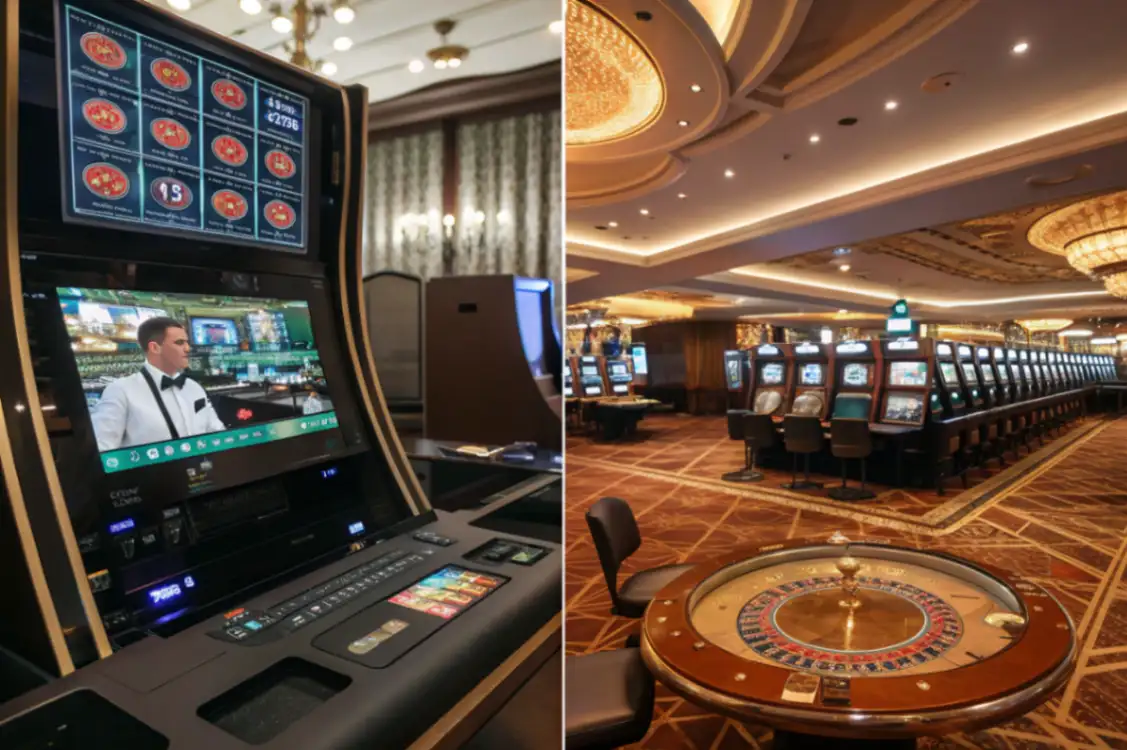
At their core, online and physical casinos are built around the same objective: offering games of chance and skill for entertainment and potential profit. However, the way this objective is delivered could not be more different. Physical casinos are sensory spaces. They rely on architecture, atmosphere, human interaction, and real-world immersion. The clinking of chips, the presence of dealers, and the energy of other players are integral parts of the experience. Las Vegas exemplifies this model better than anywhere else, combining gambling with luxury hotels, shows, restaurants, and nightlife into a single destination.
Online casinos, by contrast, are digital platforms optimized for accessibility and efficiency. They strip away the physical environment and focus on software, interfaces, and algorithms. Games are powered by random number generators, live dealer studios, or hybrid systems that attempt to replicate the feel of a real casino through video streaming. Convenience is the defining feature: players can log in at any time, from any location, and play for minutes or hours without travel or social pressure.
This fundamental difference shapes everything else. Physical casinos emphasize experience and status, while online casinos emphasize flexibility and scalability. One is rooted in tradition and spectacle, the other in technology and personalization. Understanding this distinction is essential before comparing specific criteria such as cost, comfort, or game variety.
Key Criteria for Choosing Between Online and Physical Casinos
Choosing between an online casino and a physical casino is rarely about a single factor. Most players subconsciously weigh several criteria at once, even if they do not articulate them clearly. These criteria include accessibility, cost, social interaction, game availability, and overall control over the gambling experience. When these elements are laid out side by side, the differences become easier to evaluate.
Below is a comparative overview that highlights how online casinos and physical casinos typically perform across key decision-making criteria.
| Criterion | Online Casinos | Physical Casinos (Las Vegas) |
|---|---|---|
| Accessibility | Available 24/7 from almost anywhere | Requires travel and physical presence |
| Cost Structure | Lower overhead, frequent bonuses | Higher costs due to staff and facilities |
| Game Variety | Thousands of digital games | Limited by floor space |
| Social Interaction | Optional, often minimal | Central to the experience |
| Pace of Play | Fast, user-controlled | Slower, influenced by environment |
| Atmosphere | Digital, customizable | Immersive and sensory-rich |
This comparison shows that online casinos tend to optimize for efficiency and player control, while physical casinos prioritize atmosphere and human connection. Importantly, neither approach is inherently superior. A player seeking immersion and excitement may find online platforms lacking, while someone focused on convenience and value may see physical casinos as unnecessarily expensive or restrictive.
Understanding these criteria helps frame the rest of the discussion, particularly when examining how each format performs in specific areas such as comfort, entertainment, and long-term engagement.
Advantages and Disadvantages of Online Casinos in Practice
Online casinos have grown rapidly because they solve several problems that traditional casinos cannot. The most obvious advantage is convenience. There is no need to book flights, reserve hotels, or adjust schedules. A player can open an account, deposit funds, and start playing within minutes. This level of immediacy has fundamentally changed gambling habits, especially for casual players who do not see gambling as a major social event.
Another significant benefit is game variety. Online platforms are not limited by physical space, which allows them to offer thousands of slots, table games, and specialty formats. Software providers constantly release new titles, often with innovative mechanics, themes, and bonus systems that would be impossible to replicate on a casino floor. This creates a sense of constant novelty that appeals to players who enjoy experimentation.
When evaluating online casinos, several practical advantages usually stand out to players:
- Greater control over betting limits and session length.
- Frequent bonuses, promotions, and loyalty rewards.
- Access to detailed statistics and game history.
- Ability to play anonymously or socially, depending on preference.
After considering these benefits, it is also important to acknowledge the downsides. Online casinos lack physical atmosphere. Even with live dealer games, the experience is mediated through a screen, which can feel detached. There is also a risk of overuse, as the ease of access can make it harder for some players to maintain discipline. Technical issues, such as connectivity problems or platform reliability, can disrupt play and reduce enjoyment.
Overall, online casinos excel in flexibility and efficiency, but they require players to self-regulate more actively and accept a less immersive environment.
The Unique Appeal of Physical Casinos and Las Vegas
Physical casinos offer something that no online platform can fully replicate: presence. Walking into a Las Vegas casino is designed to feel like entering another world. Lighting, sound, layout, and human interaction are carefully orchestrated to create excitement and anticipation. Gambling becomes just one part of a larger experience that includes dining, entertainment, and social status.
Las Vegas, in particular, represents the pinnacle of this model. The city is not just a collection of casinos; it is a cultural symbol of risk, luxury, and spectacle. For many players, visiting Las Vegas is a once-in-a-lifetime experience or a ritual that goes far beyond the games themselves. High-limit rooms, professional dealers, and the possibility of seeing celebrities all contribute to the sense of occasion.
However, this appeal comes at a cost. Physical casinos have high operational expenses, which are reflected in tighter odds, higher minimum bets, and fewer promotions compared to online platforms. Time constraints also play a role. A visit to Las Vegas requires planning, travel, and a significant financial commitment beyond gambling itself.
Despite these limitations, physical casinos remain powerful because they transform gambling into an event rather than a routine activity. For players who value atmosphere, human connection, and prestige, this transformation is often worth the additional expense.
Technology, Innovation, and the Changing Casino Experience
Technology has become the central force reshaping both online and physical casinos. In the online space, advancements in software, streaming, and mobile optimization have made platforms more sophisticated and accessible than ever. Live dealer games, virtual reality experiments, and personalized interfaces are narrowing the gap between digital and real-world experiences.
Physical casinos, including those in Las Vegas, have also embraced technology, though in different ways. Cashless payments, player tracking systems, and digital displays have modernized casino floors. Some venues now integrate mobile apps that allow players to book tables, receive promotions, or manage loyalty rewards directly from their phones.
The difference lies in the direction of innovation. Online casinos innovate to enhance efficiency and personalization, while physical casinos innovate to enhance immersion and operational control. Both approaches reflect the strengths of their respective environments. Importantly, this technological evolution suggests that the future is not a simple replacement of one format by another, but a coexistence shaped by hybrid solutions.
As technology continues to evolve, players can expect experiences that blur traditional boundaries, such as online platforms offering social features inspired by physical casinos, and land-based venues incorporating digital elements that extend play beyond the casino floor.
Responsible Gambling and Player Control
One of the most important considerations when comparing online and physical casinos is responsible gambling. The structure of each format influences how players interact with risk, time, and money. Online casinos provide powerful tools for self-regulation, such as deposit limits, time reminders, and account cooling-off periods. These features can help players maintain control, especially when used proactively.
At the same time, the constant availability of online casinos can increase the risk of impulsive behavior. Without the natural breaks imposed by travel or social context, some players may find it harder to step away. This makes personal discipline and platform choice especially important in the digital environment.
Physical casinos impose limits through their very nature. Travel, opening hours, and social presence can act as natural barriers to excessive play. However, these casinos may offer fewer formal tools for self-exclusion or limit-setting on the spot, relying instead on staff intervention or player initiative.
Ultimately, responsible gambling depends less on the format and more on awareness, education, and personal habits. Both online and physical casinos can be enjoyed safely when players understand their own boundaries and use available tools wisely.
Future Trends and What They Mean for Players
The future of gambling is unlikely to be an either-or scenario. Instead, it will be shaped by convergence. Online casinos will continue to grow, driven by mobile access, global markets, and technological innovation. Physical casinos, especially destinations like Las Vegas, will focus more heavily on experience, entertainment, and exclusivity.
For players, this means more choice rather than less. Casual and frequent gamblers may prefer online platforms for regular play, while reserving physical casinos for special occasions. High-value players may move fluidly between both worlds, taking advantage of digital convenience and real-world prestige as circumstances allow.
Regulation will also play a key role. As governments refine gambling laws, particularly in online markets, transparency and player protection are likely to improve. This could further legitimize online casinos and reduce the trust gap that still exists for some players.
In this evolving landscape, informed choice becomes the most valuable skill. Understanding how each format aligns with personal goals, habits, and expectations will matter more than following trends or assumptions.
Conclusion
The comparison between online and physical casinos is not about declaring a definitive winner. It is about recognizing that these formats serve different purposes and appeal to different motivations. Online casinos offer unmatched convenience, variety, and control, making them ideal for flexible, value-driven play. Physical casinos, especially in Las Vegas, deliver immersion, social energy, and a sense of occasion that digital platforms cannot fully replicate.
For today’s player, the best choice depends on context. Some moments call for the comfort of a screen and a quick session, while others demand the excitement of a real casino floor under bright lights. By understanding the criteria, advantages, and limitations of each option, players can make decisions that enhance enjoyment rather than compromise it.